Bifocal and Multifocal Contact Lenses
If you need correction for presbyopia but dislike the idea of bifocal eyeglasses, you have many contact lens options.
Because of the strong material and the ability to diffuse oxygen, GP lenses offer a number of advantages over soft contact lenses.
Unlike soft lenses, GPs don’t contain water, which makes them less likely to attract and breed the bacteria that cause eye infections. Protein deposits also build up less on the lens, keeping it cleaner and healthier.
Because they are made with a strong, durable material, GP lenses won’t tear and are easy to clean and disinfect. RGPs keep their firm shape and will not dehydrate. GPs also last longer than soft lenses: when cared for properly, a pair can last a year or more.
GP contact lenses are custom made for each patient based on the eye’s individual curvature, size and corneal shape. Their ability to transmit oxygen reduces eye problems such as dry eyes caused by reduced oxygen that are common in many brands of soft lenses or hard (non-GP) lenses.
GP lenses have a smaller diameter than soft contacts, meaning that they cover less of the surface of your eye. While this may take some time getting used to, many people find that GP lenses end up just as comfortable as soft lenses, sometimes more so.
Due to the rigid material, GPs have a smooth surface and maintain their shape, moving along with the eye to hold their place. This provides sharp, stable vision, and because they don’t dehydrate, that clarity holds up through the day.
Because they last so long, GPs are much more cost effective than soft lenses, especially disposable lenses you replace constantly. Because they are made to order, there is an upfront cost and a replacement pair can take up to a week to manufacture.
GP lenses can be a good option for people with astigmatism who have been told they cannot wear soft lenses. Because of the rigid material, they hold their shape on the eye, which supports clear, stable vision correction.
One of the downsides of GP contact lenses is that they require an adaptation period, particularly if you are used to soft lenses with a larger diameter. One of the major differences is an experience of “lens awareness” in which you feel the edge of the lens when you blink. It could take up to a few weeks to get used to them, but many people find that after this initial period GP lenses are as comfortable as soft lenses, sometimes more so.
Research shows that gas permeable lenses might be effective in slowing the progression or worsening of myopia or nearsightedness, particularly in children. They are also used in Orthokeratology (ortho-k), a vision correcting procedure in which you wear the lenses at night to reshape your cornea for improved vision during the day.
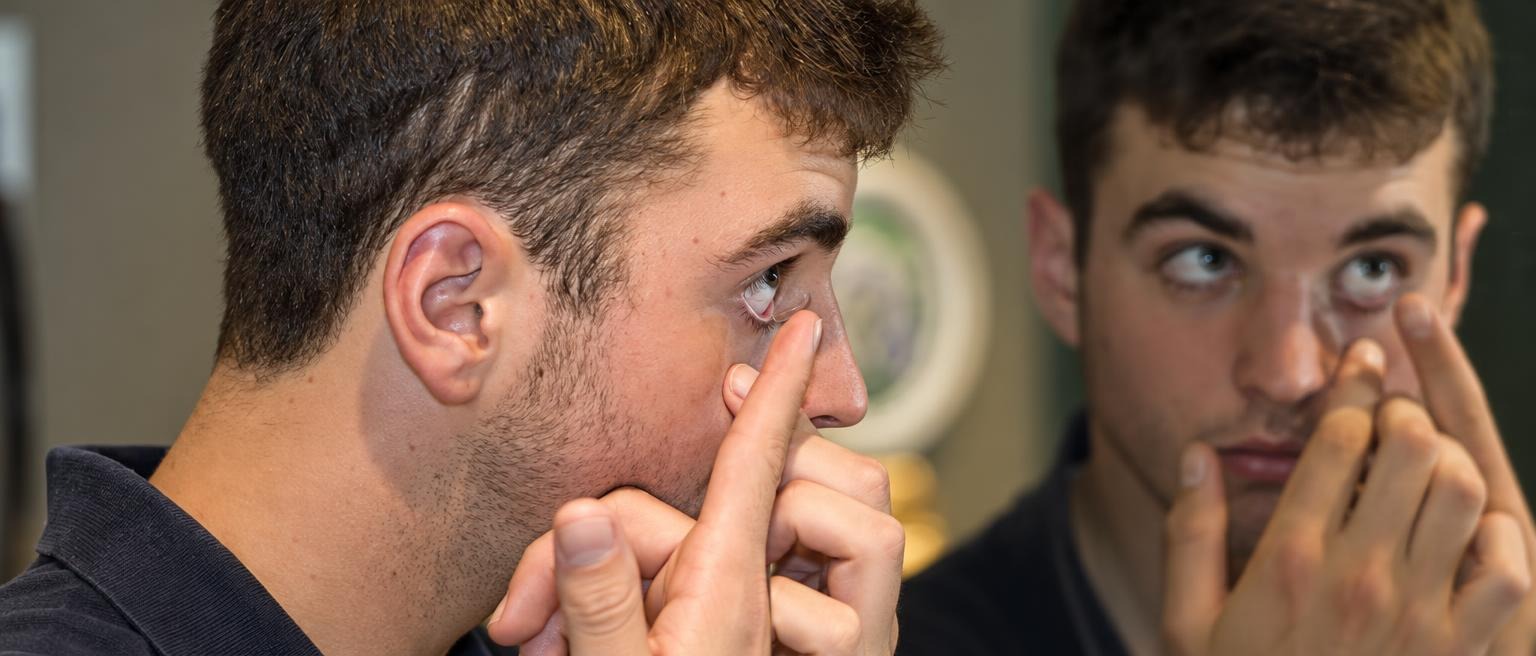
GP lenses are custom-made, so a proper fitting is the first step. Our optometrists at Berryessa Optometry measure your cornea and evaluate how your eyes handle lens wear, then order the design that suits you. Because they take some getting used to, we’ll also walk you through inserting, removing and caring for them so the adaptation period goes smoothly.
If you need correction for presbyopia but dislike the idea of bifocal eyeglasses, you have many contact lens options.
“I can’t wear soft contacts; I have astigmatism.” This once-true statement is now simply a myth.
What if you could wear contacts while sleeping, and then see clearly during the day without them? It’s a time-tested reality called ortho-k.
Challenges such as astigmatism, presbyopia, keratoconus and dry eyes needn’t be a barrier to contact lens wear, but they do require more time and patience.
With keratoconus the cornea thins and bulges into a cone shape. Rigid gas permeable and scleral lenses can help restore clear, comfortable vision.
Browse every contact lens option we fit, from soft and toric lenses to specialty designs.

We are a proud distributor of Maui Jim: “The Sun Will Guide Us”
Not sure whether GP lenses suit your eyes? Call (408) 272-7200 to book a contact lens fitting at Berryessa Optometry.
