Contact Lenses
Explore every contact lens option we fit at Berryessa Optometry.
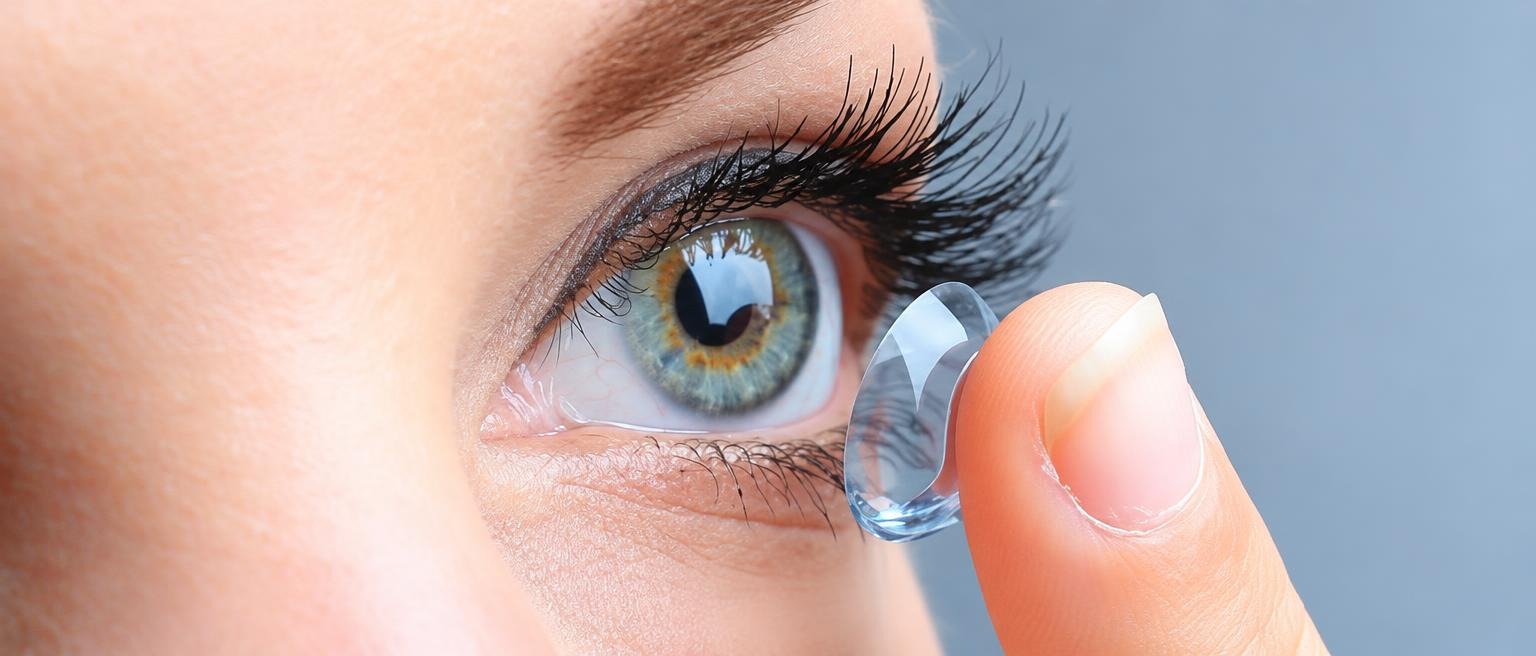
Orthokeratology is often a good option for nearsighted people who are too young for LASIK surgery or who are not good candidates for vision correction surgery for another reason. Because it can be discontinued at any time without permanent change to the eye, people of any age can try the procedure, as long as their eyes are healthy.
Ortho-k is particularly appealing for people who participate in sports, or who work in dusty, dirty environments that can make contact lens wear difficult.
The goal for ortho-k is to correct your vision to 20/20 without eyeglasses or contact lenses during the day. In FDA trials of both CRT and VST lenses, more than 65% of patients were able to achieve 20/20 visual acuity after wearing the reshaping lenses overnight. More than 90% were able to see 20/40 or better (the legal vision requirement for driving without glasses in most states).
Success rates for ortho-k tend to be higher for mild prescriptions. Call our office at (408) 272-7200 to find out if your prescription is within the range that can be successfully treated with ortho-k.
Though you may see some improvement in your vision after a day or two of overnight ortho-k, it can take several weeks for the full effect to be apparent. During this time, your vision will not be as clear as it was with glasses or contacts, and you are likely to notice some glare and halos around lights. It’s possible you may need a temporary pair of eyeglasses for certain tasks, like driving at night, until your vision is fully corrected by the ortho-k lenses.
Some people have comfort issues when attempting to wear gas permeable contact lenses during the day. But since ortho-k GP lenses are worn during sleep, comfort and lens awareness are generally not a problem.
Ortho-k is a much longer process than a regular contact lens fitting. It requires a series of office visits and potentially multiple pairs of lenses. GP lenses used for ortho-k also cost more than most regular contact lenses, so orthokeratology fees are higher than fees for regular contact lens fittings.
Yes, it’s possible to have LASIK surgery after orthokeratology. But because ortho-k lenses reshape your cornea, you must stop wearing them for a period of time, usually several months, so your eyes can return to their original shape and stabilize. Be sure to tell your LASIK surgeon that you’ve worn ortho-k lenses, so they can advise you how long you should wait before having the surgery.
Explore every contact lens option we fit at Berryessa Optometry.
These rigid lenses offer the advantages of durability, crisp vision and high oxygen permeability.
If you need correction for presbyopia but dislike the idea of bifocal eyeglasses, you have many contact lens options.
“I can’t wear soft contacts; I have astigmatism.” This once-true statement is now simply a myth.
Challenges such as astigmatism, presbyopia, keratoconus and dry eyes needn’t be a barrier to contact lens wear.
Certain types of contact lenses and eyeglasses may play a role in slowing the progression of myopia.
We are a proud distributor of Maui Jim: “The Sun Will Guide Us”
Curious whether ortho-k is right for you? Call (408) 272-7200 to book an ortho-k consultation with the optometrists at Berryessa Optometry, or request an appointment online.
