Your Comprehensive Eye Exam
One Exam, a Whole Picture of Your Eye Health
Your eyes are one of the most complex organs in your body. A comprehensive eye exam to assess your visual system and eye health involves a number of different tests. Unlike a simple vision screening, which only assesses your vision, a comprehensive eye exam includes a series of tests to complete an evaluation of the health of your eyes and your vision.
The tests that you will undergo in a comprehensive eye examination may vary from eye doctor to eye doctor, but here are some common exams that you may encounter.
Getting Started: Your History and Your Vision
Patient Background and History
One of the most important parts in a comprehensive eye exam is your patient health history. This information will alert your doctor to any conditions that should be monitored closely, such as an allergy to any medications, current or family history of systemic or eye pathology, or environmental conditions that could be affecting your vision or eye health. This will also help your doctor determine what preventive eye care can keep your eyes healthy for years to come.
Visual Acuity
Visual acuity is a measurement of your vision using an eye chart, the Snellen Eye Chart. In this test the patient is seated at a standard distance and is asked to read letters or symbols of various sizes, which get smaller as you move down the chart. The results are the familiar ratio of 20/20, 20/40 and so on, which compares your vision to the average person with good vision, typically 20/20. For example, a patient that has 20/40 vision can only see at 20 feet what the normal person can see from a distance of 40 feet. This test is a preliminary test of how clearly you are seeing in each eye, but it does not give you a prescription for corrective lenses.
Your Prescription: Refraction and Retinoscopy
Refraction
Those who don’t have 20/20 vision have what is usually called a “refractive error.” You may have nearsightedness, farsightedness, astigmatism or another condition that prevents you from seeing 20/20. A refraction tells the doctor which prescription lenses will correct your eyesight, either to 20/20 or to the best level your vision can reach.
A refraction may include a couple of steps.
Retinoscopy
Retinoscopy is a test that lets the doctor get an approximate prescription for eyeglasses. In this test the doctor uses a hand-held instrument called a retinoscope that shines a light into your eye. The doctor then reads the reflex of the light from your eye to determine your prescription for glasses.
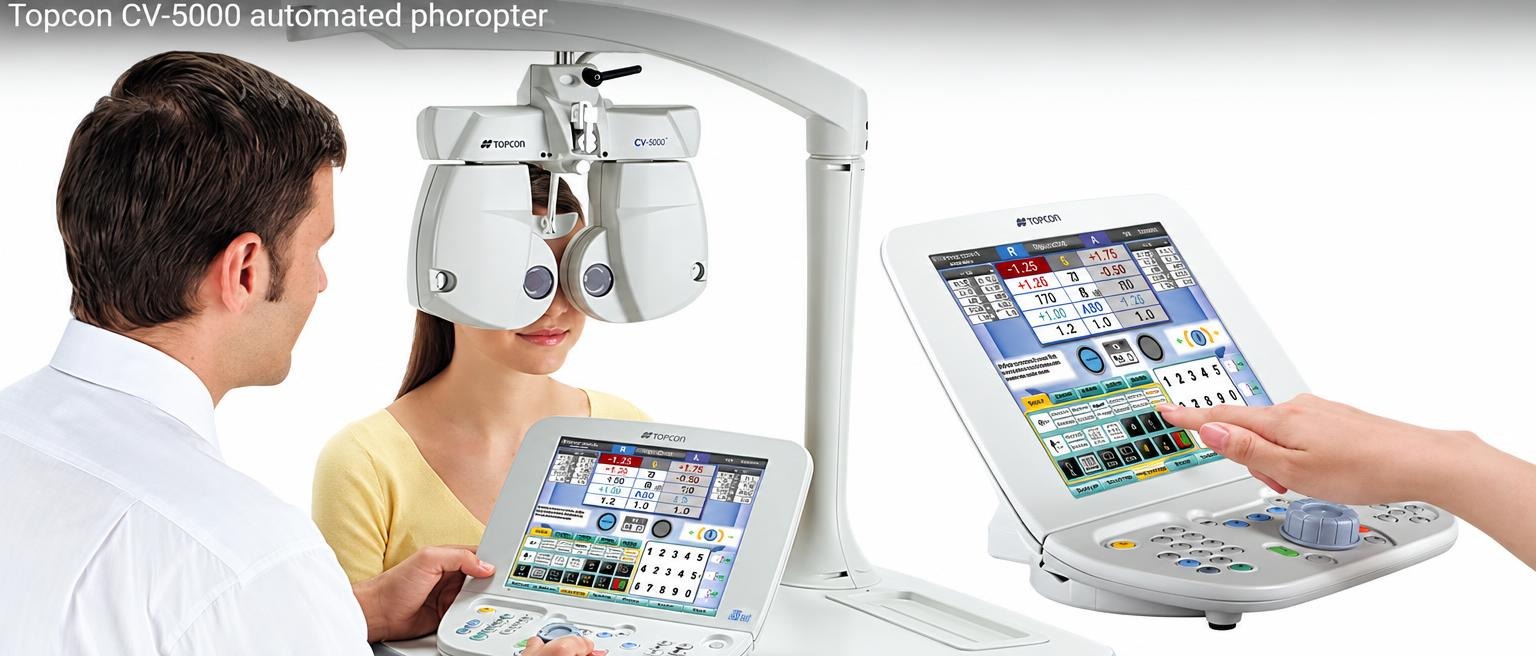
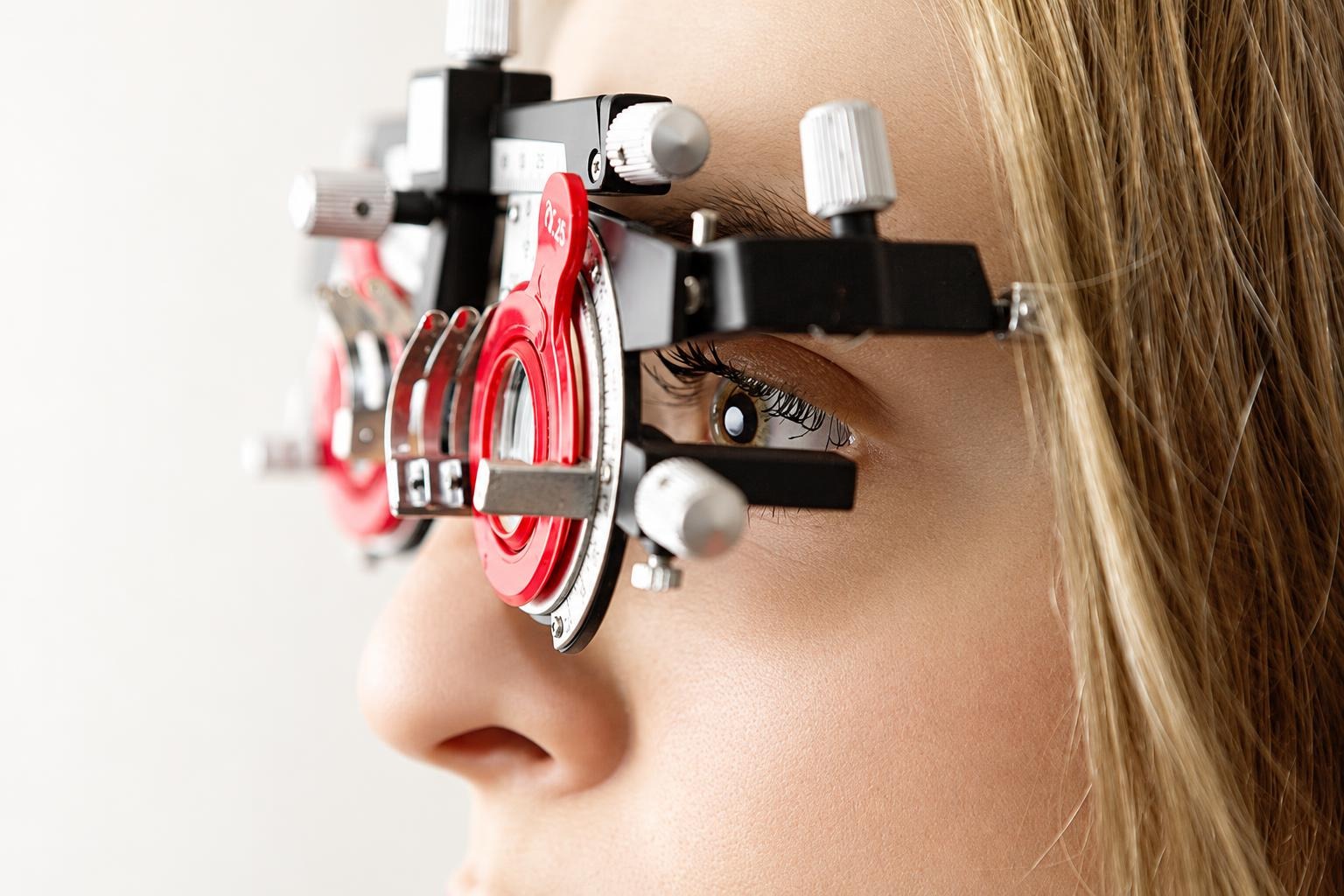
An instrument called a phoropter is what most patients picture when they think of an eye exam. This instrument, positioned in front of your face during the exam, lets the doctor determine your focusing ability as well as your eye alignment. The phoropter also identifies which, out of the hundreds of possible eyeglass prescriptions, will help you see as clearly as possible. Using the phoropter, the doctor will ask you which series of lenses makes your vision clearest.
While retinoscopy works well for children and nonverbal patients, there are now a number of computerized or automated instruments that help doctors accurately determine your eyeglass prescription.
Autorefractors and Aberrometers
Autorefractors and aberrometers are computerized machines that are able to measure your refractive error to determine your prescription for glasses or contact lenses. These instruments are usually used in addition to the testing described earlier.
- An autorefractor is similar to retinoscopy: it electronically analyzes the light reflex from your eye.
- An aberrometer measures distortions, or aberrations, in the cornea and lens of the eye that disrupt proper focus of light on the retina. Using wavefront technology, the instrument measures rays of light as they pass through your eye to look for imperfections that may indicate a refractive error.
Eye Focusing and Eye Teaming Tests
During the comprehensive eye exam, your eye doctor will also want to test how your eyes work individually and together. To see clearly and comfortably, your eyes need to work as a team.
Checking the Health of Your Eyes
The final and most important aspect of a comprehensive eye exam is a check of your overall eye health. These tests are done to identify any eye conditions or diseases, both inside the eye as well as the external parts of the eye, that could affect your vision and general health.
Slit Lamp Test
The slit lamp, or biomicroscope, lets the doctor examine the internal and external parts of the eye in detail, including the conjunctiva, iris, lens, cornea, retina and optic nerve. You rest your forehead and chin on a headrest to steady your head while the doctor looks into the eye with the slit lamp microscope, which combines magnification with a high-intensity light. A slit lamp test lets the doctor check for signs of normal aging and eye disease, such as conjunctivitis, cataracts, macular degeneration or retinal detachment. Early diagnosis and treatment of eye diseases are essential for preventing vision loss.
Tonometry
Tonometry is a test to detect glaucoma by measuring the pressure inside your eye, or IOP (intraocular pressure). Glaucoma can cause vision loss and even blindness if the IOP in the eye is too high and damages the optic nerve.
The applanation tonometer, typically attached to a slit lamp, is one of the most common instruments for measuring the pressure in the eye. Before the test, the doctor will numb your eyes with an anesthetic, then gently applanate (put pressure on) the cornea to measure the pressure inside.
Pupil Dilation
During your comprehensive eye exam, your doctor may decide to do a dilated eye exam. In this test, your doctor will place dilating drops in each eye, which enlarge your pupils to give the doctor a better view of certain parts of the back of the eye. Dilation is done at the doctor’s discretion, with some patients dilated every year and others at specified intervals; the frequency varies for each patient.
Typically the drops take around 20 to 30 minutes to take effect and may last up to several hours after the exam; every patient is different. Because more light enters your eyes when your pupils are dilated, you will be more sensitive to bright light, especially sunlight. Your doctor may provide disposable sunglasses, but you may want to bring your own pair to wear after the exam until the drops wear off.
A comprehensive eye exam is an important part of your overall general health maintenance and should be scheduled on a regular basis. The findings from your comprehensive eye exam can give your doctor important information about your overall health, particularly diabetes and high blood pressure.
Patient Resources

We are a proud distributor of Maui Jim: “The Sun Will Guide Us”
Ready for a comprehensive eye exam? Call (408) 272-7200 to book with Berryessa Optometry, or request an appointment online.
