Multipurpose or hydrogen peroxide? Both clean and disinfect your lenses, but only one of them reaches deeper than the surface.
Once you and your doctor have decided on the type of contact lenses you’ll need, it’s time to choose the most suitable contact lens solution for your eyes and your contacts.
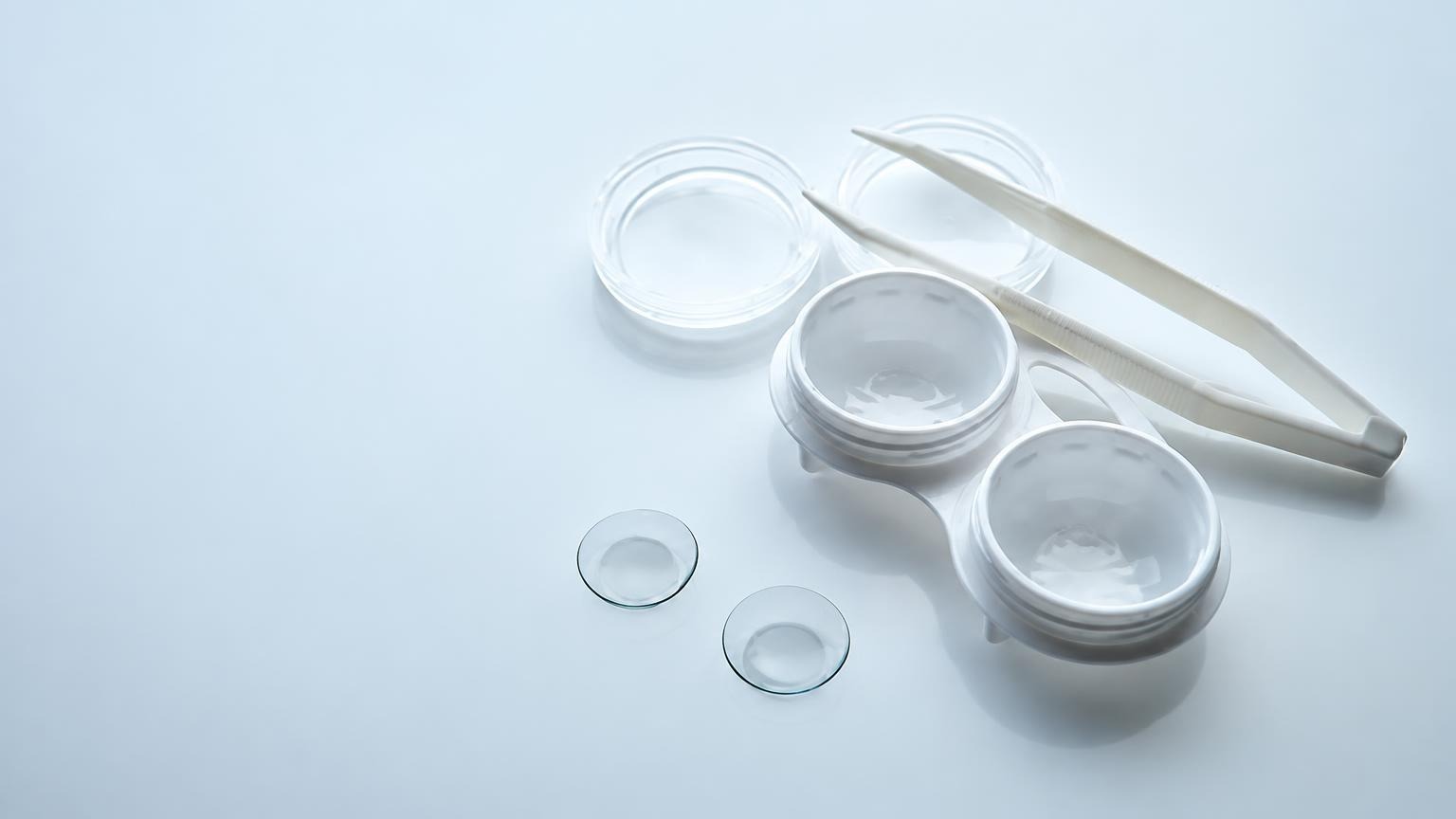
There are two different types of solution for contact lenses: multipurpose and hydrogen peroxide-based. While both remove debris and build-up and disinfect lenses, only hydrogen peroxide is capable of penetrating the microbial biofilms for a deeper clean. As an added benefit, hydrogen peroxide does not contain preservatives, which can be particularly helpful for those with allergies or eye sensitivities.
Multipurpose Solution
Multipurpose solutions are straightforward and easy to use; only one solution is needed to rinse, clean, disinfect and store your contacts. Their convenience and low cost make them a popular choice.
Hydrogen Peroxide Solution
Hydrogen peroxide solutions, such as Clear Care® by Alcon or Refine One Step™ by CooperVision, contain no preservatives or allergens. The solution thoroughly breaks up the proteins and removes deposits on the lenses during the disinfection process, which can be beneficial for people who tend to accumulate large amounts of build-up on their lenses. Hydrogen peroxide is also more effective at battling acanthamoeba keratitis, an eye infection that may lead to blindness, than other types of contact lens solutions.
Because hydrogen peroxide causes stinging and burning when it touches the eye, the solution must be neutralized before your lenses are safe to wear. Included with every solution bottle is an upright contact lens case containing a platinum-coated disk that chemically reacts with the hydrogen peroxide to decompose it into a safe, non-irritating, sterile saline solution. This reaction produces bubbles inside the case as it transforms the solution over a period of several hours. Since the neutralizing disk loses its effectiveness over time, it is critical to regularly replace it.
If your eyes do come into contact with hydrogen peroxide, immediately flush them out with sterile saline. If saline is not available, wash your eyes with water or artificial tear drops, and see Dr. Hung D. Mac as soon as possible. Though painful, it does not cause permanent eye or vision damage.
How Does It Work?
To clean your lenses, place them in the designated case freshly filled with the hydrogen peroxide solution and soak them for 6–8 hours. This can be a one-step or two-step process, depending on the product. One-step products contain a built-in neutralizer in the contact lens case, while two-step products require you to add a neutralizing tablet to the solution after cleaning.
Make sure not to reuse or top off hydrogen peroxide solution after it has been neutralized, as it will have lost its disinfecting power. Be sure to dry your case thoroughly between uses, and replace your case every 2–3 months to help prevent infection.
Note that hydrogen peroxide solutions change into unpreserved saline. So if contact lenses are stored for extended periods of time (more than a couple of days), it is safer to consider multipurpose solutions for the long term.
Which One Is Right for You?
Hydrogen peroxide-based solutions are known for their exceptional disinfecting ability. They suit people who build up deposits quickly, who are sensitive to preservatives, or who simply want the deepest clean their lens care routine can give. Multipurpose solutions suit a simpler routine and short-term lens storage.
At Berryessa Optometry in Berryessa, our patients are very satisfied with the cleanliness and comfort they get from hydrogen peroxide-based solutions for their contact lenses. Speak with Dr. Hung D. Mac to find out whether this solution is right for you, and to check that your lens care routine is protecting your eyes.